New: OMG Experience Expands European Air Freight Routes — New direct services to Zurich, Lisbon, and Warsaw Read more →
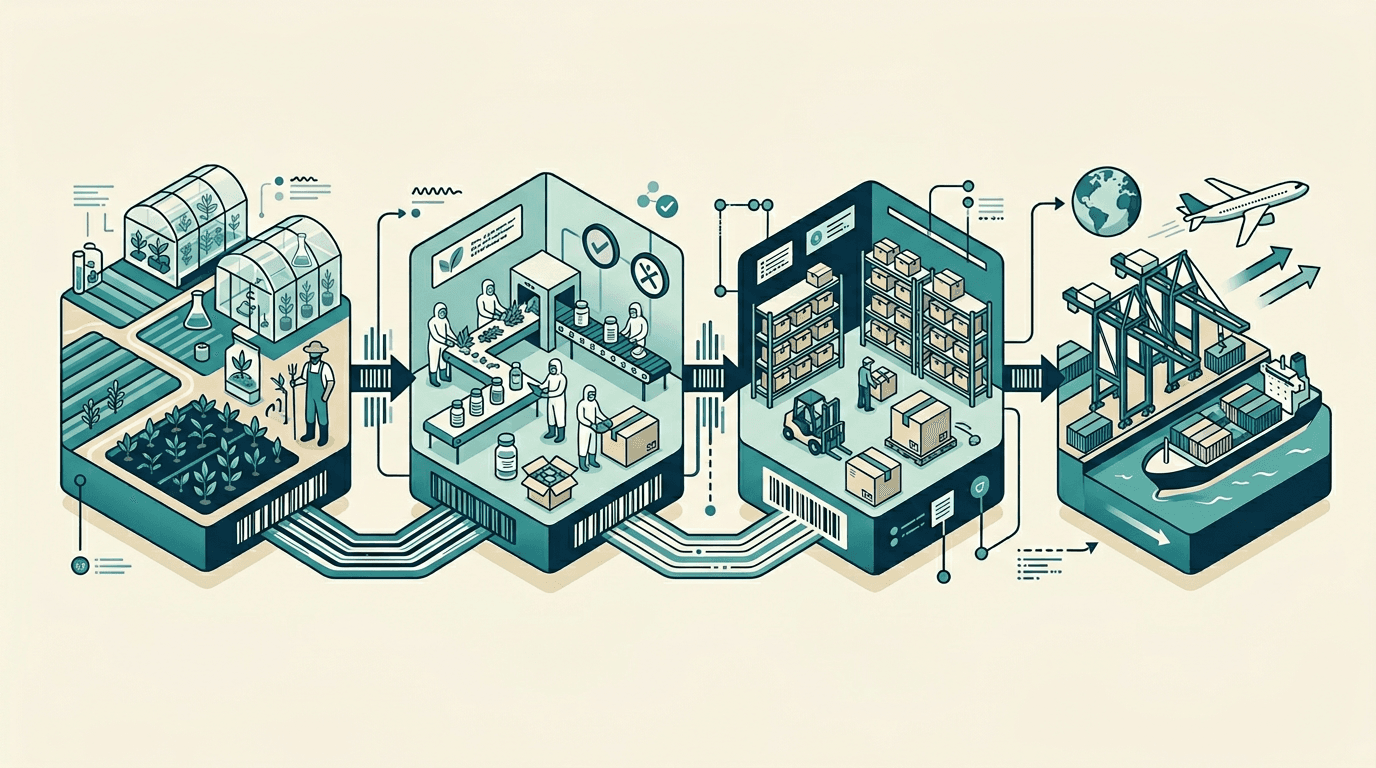
Low-THC medical export norms, narcotics research exceptions, batch-level DTAM reporting, and seed-to-sale traceability for Thai cannabis moving toward the European medicinal supply chain.
THC thresholds, narcotics exceptions, and seed-to-sale traceability are three phrases that appear together in almost every serious conversation about Thailand medical cannabis destined for European markets. They are not interchangeable: THC numbers answer analytical questions, narcotics law answers criminal classification questions, and traceability answers accountability questions. When teams collapse those layers, they get delayed shipments, re-testing bills, and lost importer trust. This article unpacks how operators should document each layer so DTAM-facing reporting and EU customer audits read the same story.
Disclaimer: Analytical and legal thresholds change by jurisdiction and product class. Treat every number in your contractual specification and competent authority guidance as authoritative over any general article.
Most routine medical export discussions assume material that meets commonly cited low-THC specifications used in cross-border herbal or pharmaceutical trade—always verified against your contractual specification and destination member state rules, not headlines. When product instead moves under a research authorization, you must carry explicit narcotics-exception language where applicable, protocol references, and often named principal investigators or institutional recipients. Mixing those lanes—“we thought it was medical because THC was low”—is where enforcement risk concentrates.
Document a one-page flowchart that your night-shift supervisor could follow:
If the flowchart lives only in the compliance manager’s head, you do not have a scalable operation.
Chain-of-custody is not a courier tracking number alone. It is an internal record that connects biological material to authorized handlers at each step: harvest crew, drying room operators, QC sampling technicians, and the person who signed batch release. EU partners frequently ask for organizational charts showing who can perform which GMP step; Thai operators should mirror that discipline even at GACP stage to shorten later GMP onboarding.
Batch identifiers must be stable across lab results, packing lists, customs declarations, and temperature logger files. If a lab COA says “BATCH-2026-041” but the invoice says “Lot A4,” you have created reconciliation work that scales linearly with every new shipment.
Timely reporting to national seed-to-sale or controlled-herb systems should be treated as operational critical, not back-office admin. Late entries look like data gaps under audit—even when the physical product never left spec.
Ambiguity between “agricultural commodity” and controlled medical material is the largest single source of border delays. The fix is to document the batch as medical from the earliest internal step: specification reference on the harvest record, QC sampling plan attached before drying completes, and release criteria defined before packaging.
Sales presents “premium craft flower” while SOPs describe “herbal starting material for pharmaceutical processing.” Harmonize customer-facing and internal language so investors, regulators, and EU QP reviewers do not infer dual identity. Where consumer-style language is required for brand, quarantine it to consumer channels that never attach to batch records.
Procurement QA teams often keyword-search pesticide, heavy metals, aflatoxin, microbial, and residual solvents (for extracts). Your panel should map to the end dosage form and route of administration you claim—not a generic “full panel” unrelated to EU expectations. Long-form method descriptions (HPLC vs. GC, sample prep notes) reduce technical queries in week three of diligence.
If monthly or event-based reporting is required, align cut-off dates with export windows. Nothing is more painful than discovering your digital report still lists material in quarantine when the forwarder has already tendered cleared-for-export cargo. Run a pre-flight checklist that includes both physical release and regulatory system status.
Create bilingual job aids with photos for harvest, weighing, label application, and scanner use. Literacy in regulatory English is not the same as competence in batch integrity. Competence is demonstrated through error rates on mock audits and corrective actions closed on time.
No. THC limits are jurisdiction-specific and product-form-specific. Your contract and importing country rules are the only sources that matter for a given shipment.
Because EU GMP and GDP audits assume upstream traceability exists. If Thailand-side traceability is weak, the importer inherits due diligence burden that can block QP release.
A single index PDF listing: batch ID, harvest dates, major processing steps, QC results references, packaging counts, and authorized release signatory—with hyperlinks or annex references to underlying raw data.
Carriers often have internal controlled-substance policies stricter than customs law. Your MSDS-equivalent, emergency contact, and permit copies should be courier-validated before booking—not discovered at the cargo counter.
Only if version control and reference standards are unchanged and signatories remain valid. EU auditors prefer dated, versioned templates with change logs.
Standardize on batch, lot, sub-lot, quarantine, release, and deviation exactly as they appear in your quality agreement with the importer—terminology drift causes expensive misunderstandings.
At minimum weekly for high-value rooms and daily during harvest peak. Discrepancies > tolerance trigger investigation SOP before next export.
Only if homogeneity is demonstrated or regulatory agreement allows representative testing. Otherwise sub-lot testing is non-negotiable—document the sampling plan.
Have a pre-approved contingency: paper-backed evidence pack, timestamped exports from local systems, and escalation contact. “Portal was down” without contemporaneous evidence reads as excuse, not reason.
Badge logs, supervisor attestations, and video SOPs with completion markers. Seasonal workforce is a common weak point in traceability audits.
No. Distributed ledgers do not fix garbage-in master data. Governance and mandatory fields matter more than ledger marketing.
Define a single role (often Regulatory Affairs or designated RP equivalent on the Thai side) with deputy and audit trail. Shared responsibility often means no responsibility.